
FRONTIERS | Varroa destructor economic injury levels and pathogens associated with colony losses in Western Canada
Original article published on Frontiers, May 20, 2024. Access original article here.
The author(s) declare financial support was received for the research, authorship, and/or publication of this article:

British Columbia Ministry of Agriculture and Food (agreement SCA22AG008)

Project Apism (project ID 293)

BC Hydro Peace Agricultural Compensation Fund through the Northern Development Initiative Trust Fund (project ID 7922 88)
Floyd Wigler Grant, Western New York Honey Producers Inc.
Principle Investigator

Dr. Nuria Morfin
PhD | Chair of the Technology Transfer Program, British Columbia Honey Producers Association; Assistant Professor, Department of Entomology, University of Manitoba
Collaborators

Dr. Leonard Foster
Department of Biochemistry & Molecular Biology, Michael Smith Laboratories, The University of British Columbia, Vancouver, BC, Canada

Ernesto Guzman-Novoa
School of Environmental Sciences, The University of Guelph, Guelph, ON, Canada
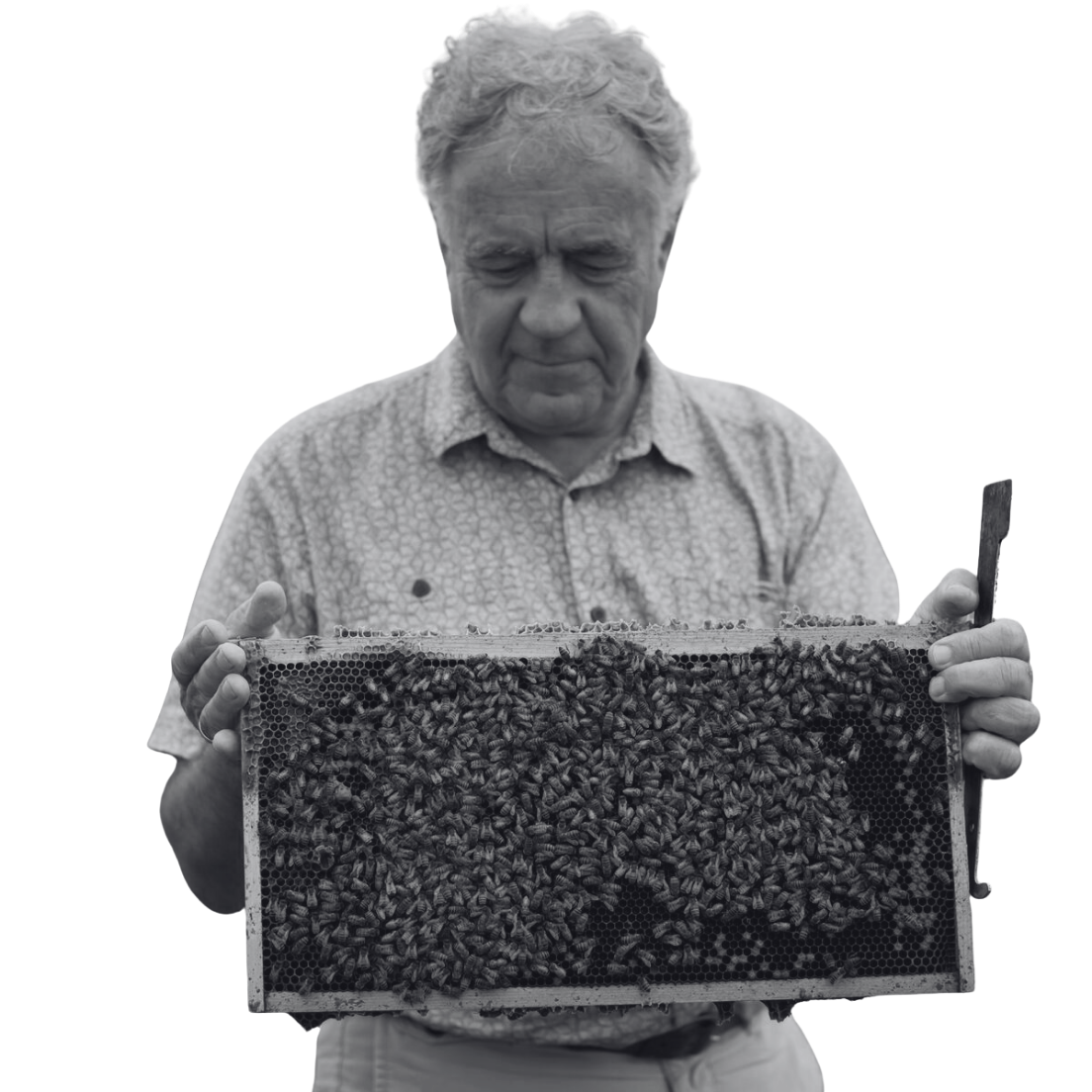
Paul van Westendorp
Department of Animal Health, The British Columbia Ministry of Agriculture and Food, Abbotsford, BC, Canada

Dr. Robert Currie
Department of Entomology, The University of Manitoba, Winnipeg, MB, Canada

Dr. Heather Higo
British Columbia Technology Transfer Program, The British Columbia Honey Producers’ Association, Victoria, BC, Canada
The video essay below summarizes the objectives and findings of a study done in collaboration with the University of British Columbia, the British Columbia Honey Producers’ Association, the University of Guelph, the BC Ministry of Agriculture and Food, and the University of Manitoba. The objectives of this study were to collect and analyze data on levels of V. destructor and other pathogens in honey bee colonies from five different British Columbia regions, and determine if there were associations between the mite, the pathogens, and colony mortality, to propose a revised Economic Injury Level for Western Canada.
We thank the participating beekeepers for their valuable contribution to this study, including Claude Paradis and Kerry Clark (Apiary Inspector, Peace region), for their input and help during field work. We also thank Tim Wang for his assistance during field experiments, Becky Miller for assisting in organizing field work: Mario L. Morfin Ramirez for his assistance in the bioinformatic analysis, and Alvaro De la Mora for doing RNA extractions. We are also grateful to The British Columbia Honey Producers’ Association Executive for their support.
The author(s) declare financial support was received for the research, authorship, and/or publication of this article. The authors declare that this study received funding from British Columbia Ministry of Agriculture and Food (agreement SCA22AG008), Project Apism (project ID 293), BC Hydro Peace Agricultural Compensation Fund through the Northern Development Initiative Trust Fund (project ID 7922 88), and the Floyd Wigler Grant, Western New York Honey Producers Inc. The funders were not involved in the study design, collection, analysis, interpretation of data, the writing of this article or the decision to submit it for publication.
///
If you have any questions, don’t hesitate to reach out to us by emailing info@ttp-bchpa.ca or by sending us a direct message on Facebook (@British Columbia Tech Transfer Program) or Instagram (@BC_TTP).