
UBeeO Protocol
April 2026
Written by: Leilani Pulsifer
Edited by: Dr. Nuria Morfin & Dr. Muhammad Fahim Raza
Honey bees (Apis mellifera) often face the threat of pests and disease, which can be combatted against by rearing bees with hygienic behavior. Hygienic behavior is the natural defense mechanism honey bees have developed to identify and remove infected or parasitized larvae before they hatch in order to prevent the spread of infection. Infected larvae release a pheromone that nurse bees respond to by removing the larvae from the colony. This behavior can be measured and scored by observing the colony’s ability to respond to this pheromone. Beekeepers can then use these scores to selectively breed for hygienic behavior to rear colonies naturally resistant to disease and pests, including the parasitic mite Varroa destructor.
What is UBeeO™?
UBeeO™ is a tool designed to measure the level of hygienic behavior a honey bee colony has against V. destructor. UBeeO™ tests a colony’s efficiency and effectiveness in removing parasitized or damaged brood. By using a simple process of applying UBeeO’s manufactured mixture of naturally occurring brood pheromones and scoring the colony’s response, beekeepers can determine which of their colonies are most hygienic and select them for further breeding.
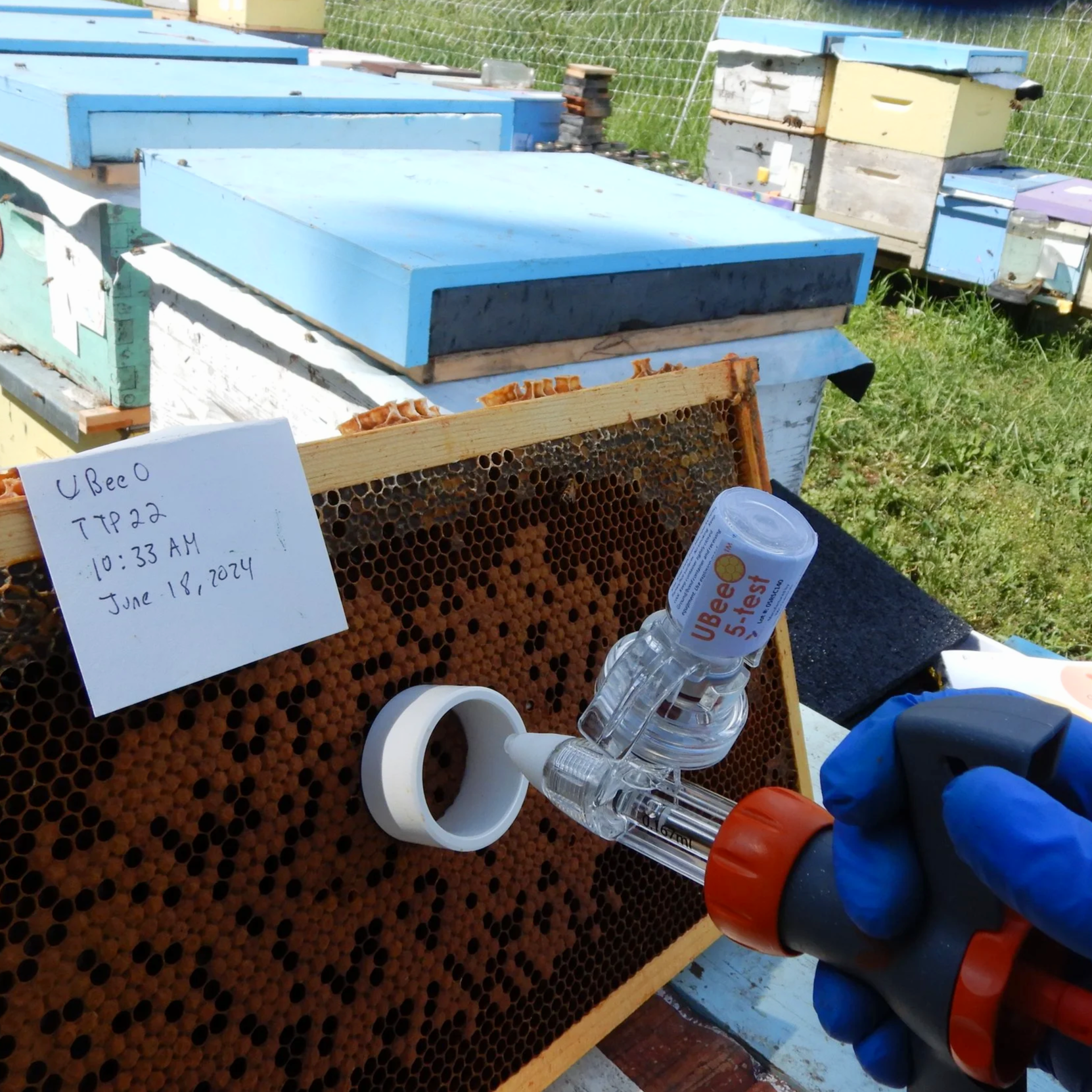
Figure 1. UBeeO™ mix being applied to test area.
How does UBeeO™ work?
UBeeO™ tests the natural response of honey bees to the release of pheromones from parasitized or damaged pupae due to varroosis, by applying a mixture of natural brood pheromones to a partitioned test area of capped brood cells and observing how many pupae are removed within a certain time period. There are three categories UBeeO™ scores can fall under depending on the number of uncapped cells: low, medium, and high scores. The higher the number of cells that have been uncapped, the higher their score. Studies have shown that untreated colonies with high UBeeO™ scores can keep mite loads below treatment thresholds and are more likely to survive the winter when compared to colonies with low UBeeO™ scores [1].
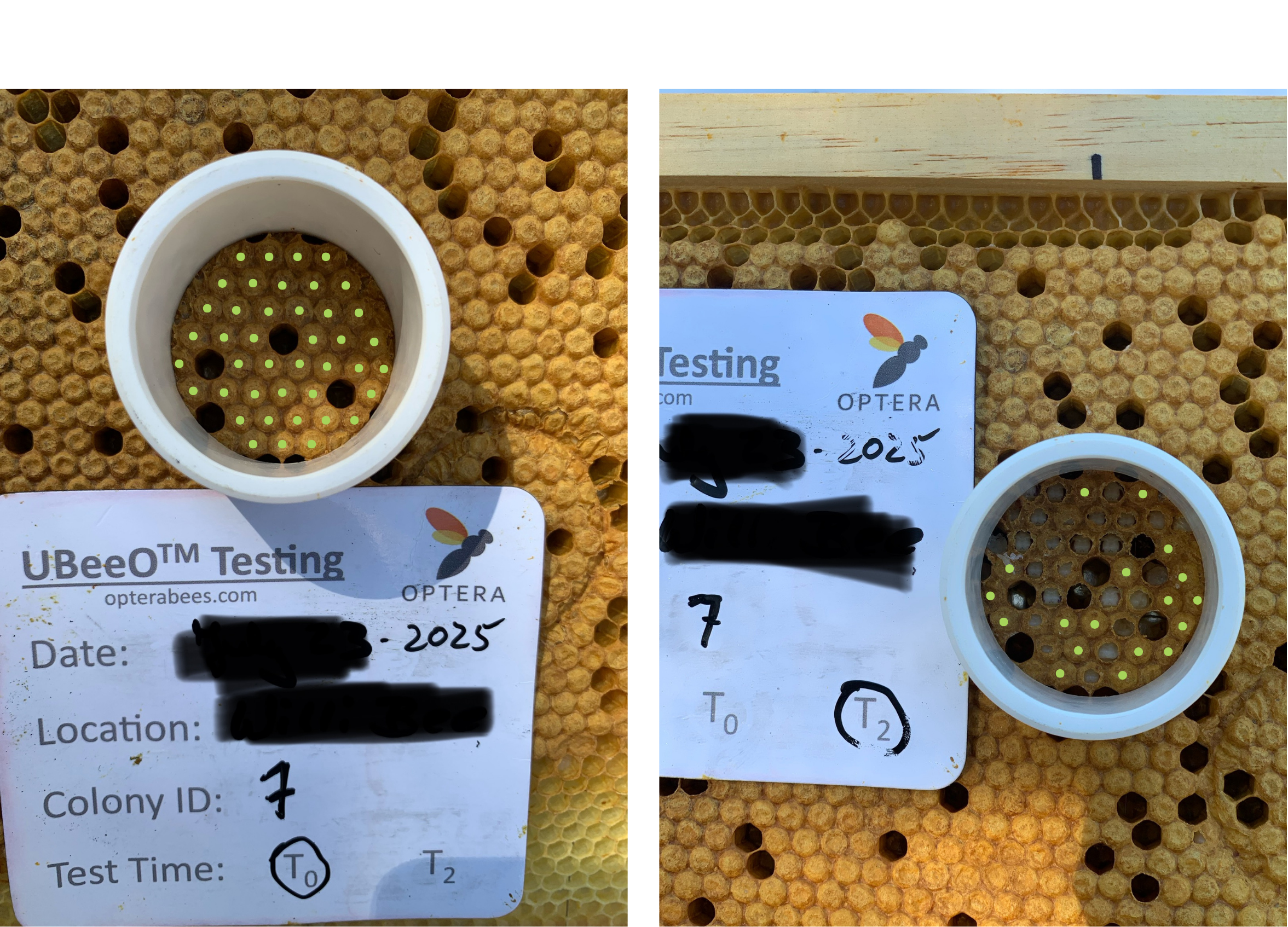
Figure 2. UBeeO™ time in (left) and time out (right).
UBeeO™ Standard Operating Procedure [2]
Note: For further details on each step, please click here for an online UBeeO instruction manual.
Set-Up
When not in use, store UBeeO™ kits in a cool, dark, dry location. It has a shelf life of one year when stored at room temperature or cooler.
Recommended testing conditions: local nectar flow is on (spring to mid-summer) and colonies being tested have been queenright for at least 7 weeks.
Staying organized: if your colonies are not named, label them before testing to keep results clear.
Set up workstation: set up a portable solid surface such as a folding table or a truck bed to lay out your materials.
If possible, avoid using your smoker during UBeeO™ testing to ensure the worker bees’ senses are at full capacity during the test period.
Isolating Test Area
Prime the UBeeO™ applicator by following the instruction manual included in your kit.
Open the hive, find and cage the queen, and place her aside. Or ensure she’s not on the frame you are testing.
Choose a brood frame containing capped, purple-eyed pupae. You may need to uncap a few cells on different areas of the frame to choose the best location.
Once a frame has been selected, ensure the queen is not on it and brush the bees off before taking it to your workstation.
Choose an area on the frame that is mostly capped and using the UBeeO™ test ring with the cutaway side pointing to the frame, gently press and twist the test ring into the brood to section off your test area. Be careful not to press too hard or you will damage the brood underneath.
Fill out the information on the UBeeO™ whiteboard including the date, location, colony ID, and test time (circle T0 to indicate the start of the test) before taking a picture of it to log the information.
Take a clear picture of the partitioned test area, ensuring that there is enough detail in the photo to count the number of capped and uncapped cells within the ring.
Applying UBeeO™
Tilt the test frame upwards at a ~30º angle and align the UBeeO™ applicator with the test area. The applicator should be held firmly with both hands to maintain proper control and grip during spraying. The spray nozzle should be positioned approximately 2–3 inches away from the mounted testing ring to ensure even mist distribution across the testing area, as spraying too close or too far may result in incomplete coverage or unintended dispersion of the testing chemical outside the ring.
Squeeze the handle of the applicator to apply one full spray of UBeeO™ mix onto the test area and release the handle. Wait 15-30 seconds for the mixture to be absorbed. Squeeze the handle a second time, wait 15-30 seconds, before applying the third and final spray. Once you have delivered three full sprays, lay the frame flat until the test area looks completely dry (~15-30 seconds).
Remove the test ring by gently twisting it in an anticlockwise direction to minimize damage to brood cell cappings located near the margins of the testing ring. Mark the top of the frame with a marker or a thumbtack to help with identification later.
Return the frame to its hive, ideally between two other brood frames.
Mark down the colony ID and the time the frame was returned (T0 Time In) on the provided Data Sheet. Add two hours to T0 Time In to determine what time to retrieve the frame (T2 Time Out).
You may continue applying UBeeO™ to other test frames for the next two hours, but after two hours from the first Time In, you must start pulling frames for scoring. If a vial runs out, please refer to the instruction manual here for instructions on how to replace the vial.
Collecting Results
After two hours, begin pulling out test frames to begin collecting results.
Starting with the first frame that was tested, retrieve it from its hive exactly two hours after it was put in.
Ensure the queen is not on the frame before brushing the bees off and bringing the test frame to your workstation.
Use the mark you left previously to locate the test area and carefully place the test ring in the exact position it was originally in (do not use any pressure).
Mark down the date, location, colony ID and test time on the dry-erase board before taking a photo to log the information.
Take a clear photo of the cells within the test ring, ensuring you can count how many cells are opened and closed.
Repeat these steps to the remainder of your test frames.
Refer to the instruction manual for steps on how to care for and maintain the applicator.
Scoring Results
Transfer the photos taken at T0 and T2 of your test colonies to a computer or hard drive. We recommend backing up your UBeeO™ data to an additional folder.
Using whatever method you feel comfortable with (downloading a collage app on your phone, copy and pasting the images onto a Word or Notes document, etc.), arrange the T0 and T2 photos of each test colony side by side so it is easy to compare the before and after photos.
In the T0 photo, count the number of closed cells that are at least 50% inside the test area. Record this number on the provided data sheet.
In the T2 photo, count the number of capped brood cells remaining inside the test area, ensuring that you are observing the same cells counted in T0. Record this number on the provided data sheet.
Calculate the UBeeO™ Score for each colony using the following formula:

6. Repeat these steps for the remaining test colonies.
7. UBeeO™ Scores can fall into one of the following categories:
Low (0-39%): Few cells are uncapped, if any; this indicates weak mite and disease resistance. This colony is not suitable for selective breeding of UBeeO-linked hygiene.
Medium (40-59%): Moderate number of cells are uncapped; this indicates some mite and disease resistance. This colony may be a suitable candidate for selective breeding of UBeeO-linked hygiene if there are no better options.
High (60-100%): Most, if not all, cells are uncapped; this indicates strong mite and disease resistance. This colony is an ideal candidate for selective breeding of UBeeO-linked hygiene.
For more information on each step, please click here for their full instruction manual.
Important Notes
If cell caps are becoming distorted or partially uncapped when applying UBeeO™, wait longer than 30 seconds between sprays ensuring that it completely dries between each application.
If brood under the test ring is being uncapped and/or removed more than the brood within the test area, try decreasing the pressure used when initially applying the test ring.
UBeeO™ scores rely on numerous factors including nectar flow, pollen quality, time of year, and how recently you have done a test in a colony. This may lead to inconsistent results within the same colony (colonies with the same queen). Try to reduce variability as much as possible when testing multiple colonies to more accurately be able to compare the hygiene results between different colonies.
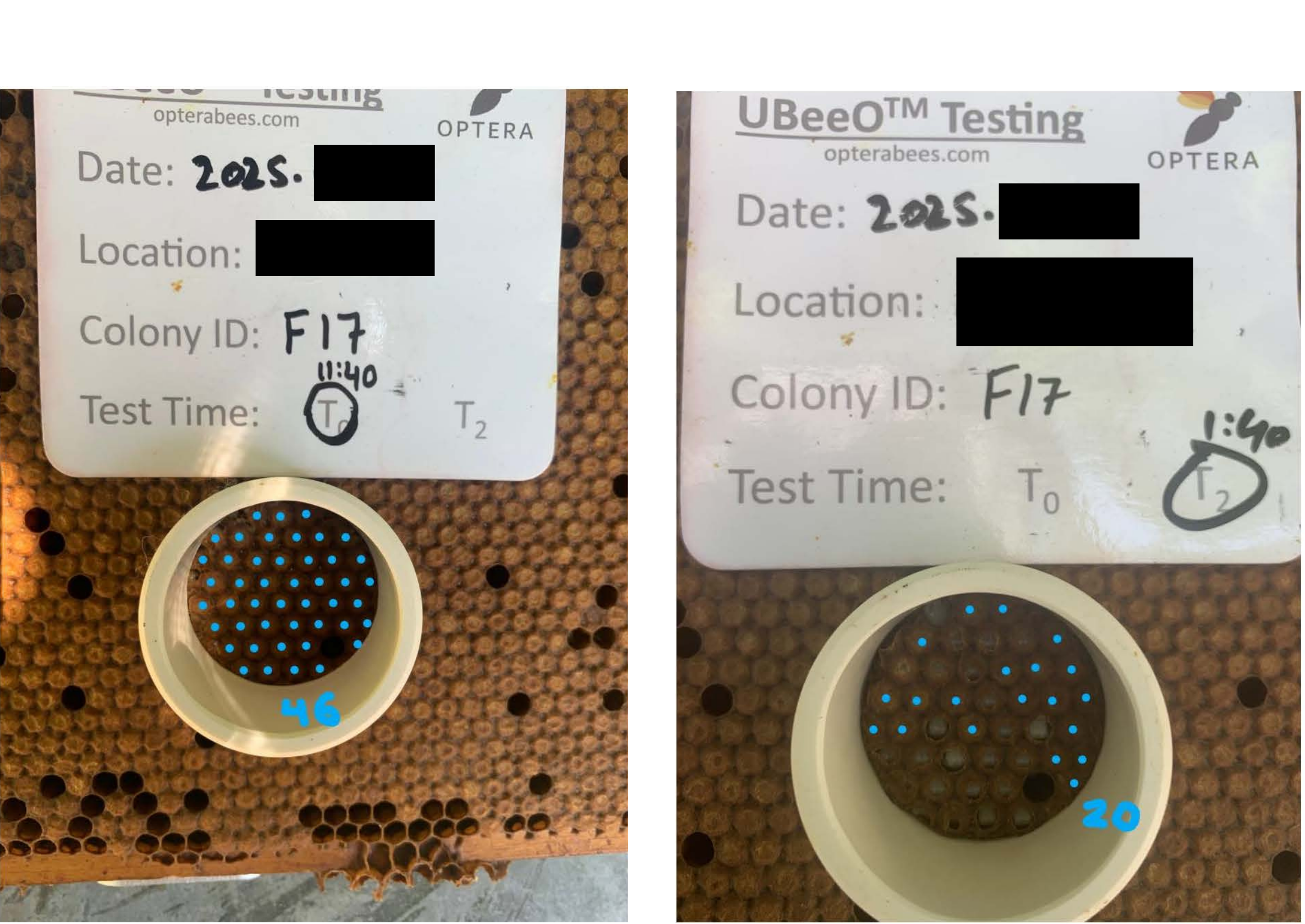
Figure 3: Time in (left) and time out (right) of a test colony.
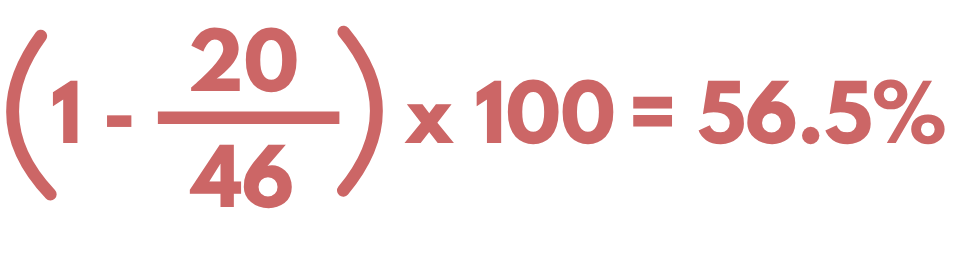
Figure 4: Calculating UBeeO score using results from Fig 3.
Where can I get UBeeO™?
UBeeO™ is available in Canada and can be purchased at certain bee supply stores such as Dancing Bee Manitoba. Please note that the BC-TTP does not endorse any specific company or vendor. We aim to provide up-to-date information and resources so that beekeepers can make informed decisions at their own discretion.
UBeeO™ can be incorporated into selective breeding programs as an additional tool to help identify colonies with potential resistance to Varroa destructor. For more ways on how to control your varroa mite levels, check out our online course, Integrated Pest Management for Varroa Mite Control, to learn the process of implementing an effective IPM strategy to prevent, control, and treat for varroa mites to build healthier, stronger colonies.
References
[1] Amiri, E., Mehrparvar, S., Valizadeh, B., & Wagoner, K. (2026). Honey bee hygienic selection impacts virus dynamics of both bees and Varroa mites. Virus Research, 18(367), 199715. Doi: 10.1016/j.virusres.2026.199715.
[2] Optera. (n.d.). Home. https://opterabees.com/
[3] Vermont Bee Lab. (2024). What we know about UBeeO: For hobbyists (UBeeO factsheet). https://vermontbeelab.com/resources/UBO-Factsheet-Hobbyists-Final-2.pdf