
Supplementary Feed | Fall, Spring, and Emergency
October 2026
Written by: Leilani Pulsifer with contributions from Axel Krause
Edited by: Dr. Nuria Morfin, Christine McDonald, and Heather Sosnowski
Despite the popular belief that honey bees hibernate in the winter, they are awake and active inside the hive. Winter bees enter a state of diapause, during which their metabolism and overall activity decrease. However, they play a critical role in colony survival. Winter bees huddle together and vibrate their thoracic muscles to create heat and maintain the internal temperature of the hive, requiring an exorbitant amount of energy and therefore a high amount of food stores [1]. Throughout the year, to combat colony losses caused by starvation, beekeepers often provide supplemental feed in the form of various ratios of sugar to water to help ensure their colonies’ survival. We will discuss three common types of feed: fall (2:1 ratio), spring (1:1 ratio), and emergency (solid) feed.
A note on sugar: Honey bees should be fed high-quality sugar, such as refined cane or beet sugar. Unrefined sugars or corn syrup should be avoided, as they can have detrimental effects on bee health [2].
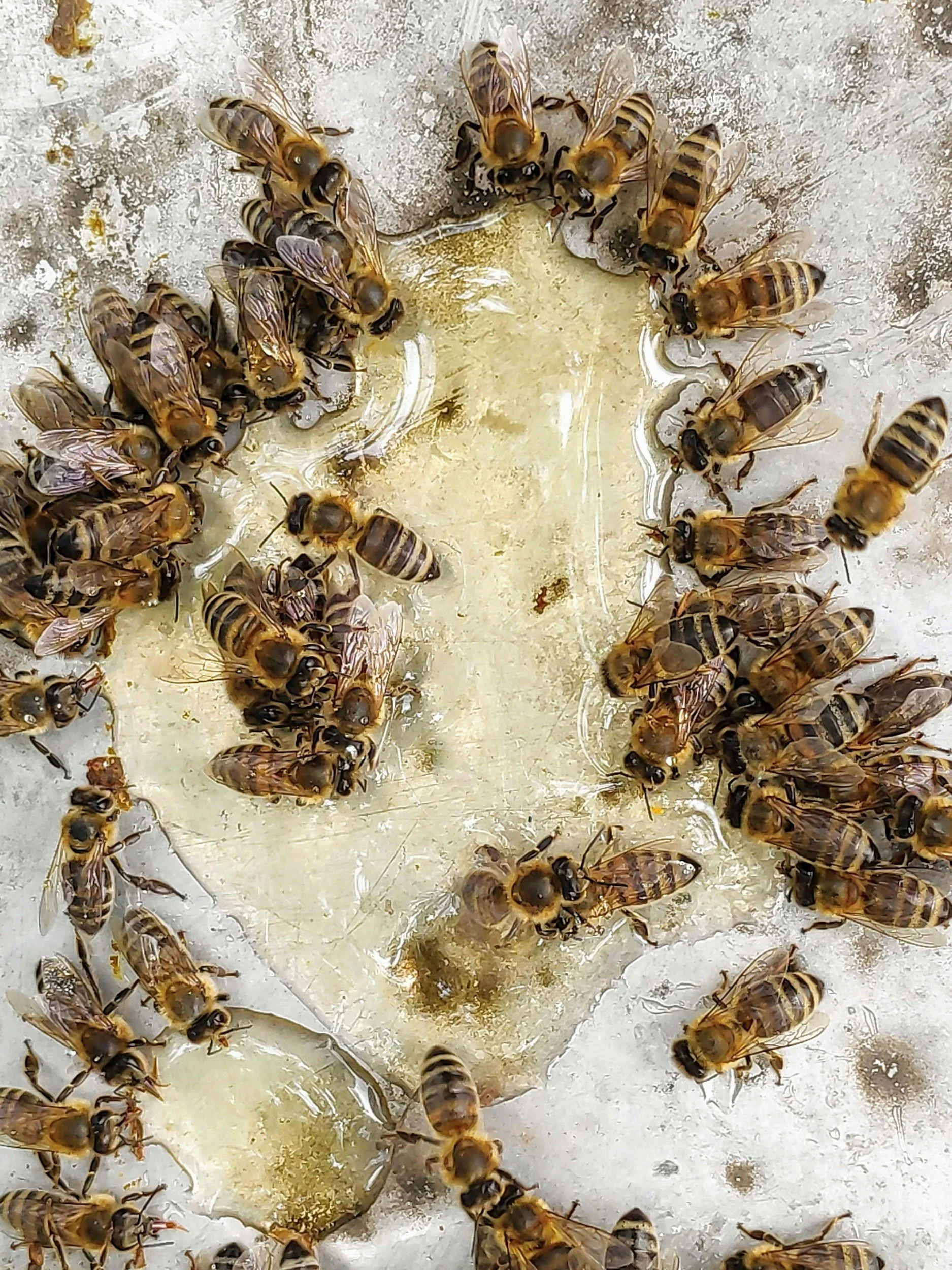
Honey bees feeding on sugar syrup.
Fall Feed | 10-15°C
Entering the fall, beekeepers will typically provide a sugar syrup with 70% sucrose content (2:1 sugar to water; e.g. 2 kg sugar dissolved in 1 L of water) to their colonies as a supplemental feed to help ensure their survival. As the temperature gets colder, bees prefer a heavier syrup because the water content is lower, so there is less to evaporate before being able to cap it for long-term storage [3].
Emergency Feed | < 10°C
Once the temperature drops below 10°C, bees can no longer effectively collect and move sugar syrup and so it’s time to switch to a solid food source. Fondant and candy boards (also known as sugar blocks or sugar bricks) are great options for winter and emergency supplementary feed because they absorb moisture (helps to manage moisture levels in the hive over winter), they are long lasting (avoids frequent hive openings), and they are placed directly on top of the frames so they are easily accessible by the bees (they don’t need to venture far to access food).
Spring Feed | ~ 15°C+
Last but not least, a light syrup can be fed in the early spring to stimulate brood rearing and comb building. Heading into the fall, a single brood chamber colony should weigh 30-40 kg whereas a double brood chamber should weigh 45-55 kg. In the early spring, tilt your hives to see how it compares to the weight in the fall. If it’s very light and easy to tilt, your colony may need additional feed to tide them over before nectar becomes readily available again. A 70% sugar syrup can be used, though a 1:1 ratio (50% sucrose content; e.g. 1kg of sugar dissolved in 1L of water) is more common in the spring because honey bees will consume it right away rather than storing it like they would a heavier syrup [3].
Below are sugar-to-water ratios acceptable for creating fall, spring, and emergency feed. These recipes were revised from those provided by Axel Krause, the West Kootenay’s apiary inspector and BCHPA Educator:
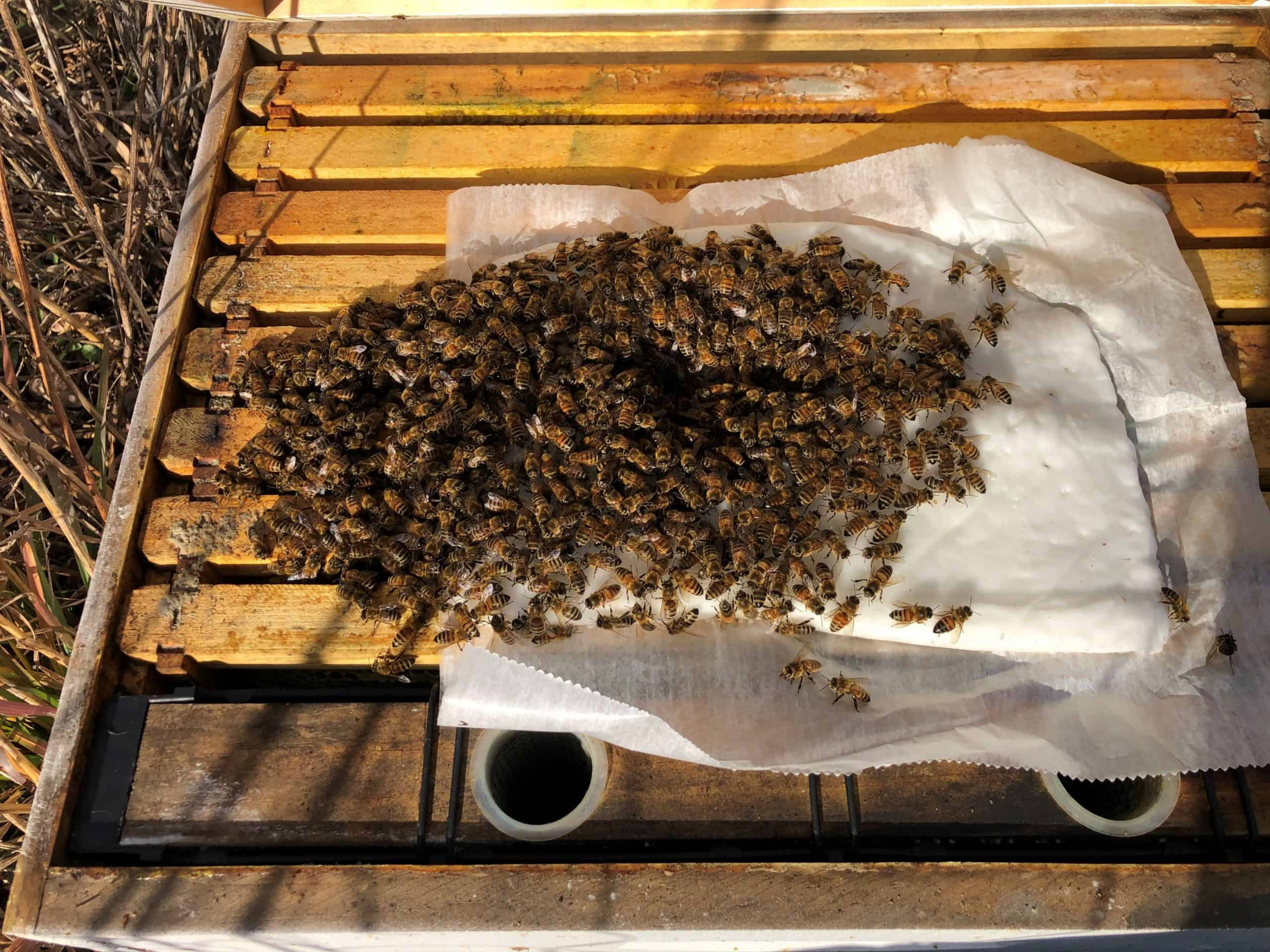
Honey bees feeding on fondant.
Supplemental feeding practices vary depending on region, climate, and individual beekeeper experience and preferred management style. A beekeeper may prefer fondant over candy boards or might just stick to sugar syrup – they all offer distinct advantages in different conditions. The recipes provided are intended as a flexible starting point, allowing beekeepers to explore and adapt the feeding method that best supports the health of their colonies while aligning with their local environment and personal approach to beekeeping.
References:
[1] Pulsifer, L. 2025, November. Winter bee biology. Technology Transfer Program. https://www.ttp-bchpa.ca/winterbeebiology
[2] A Canadian Beekeeper’s Blog. (2020, June 27). ***Lessons Learnt*** The Importance of quality feed for honey bees (Recorded webinar) [Video]. YouTube. https://www.youtube.com/watch?v=ixmovAZXeyk
[3] Ontario Beekeepers’ Association – Technology Transfer Program. (n.d.). A guide to feeding bees. Ontario Beekeepers’ Association. https://www.ontariobee.com/sites/ontariobee.com/files/GuideFeedingBees.pdf