
Spring Management
Updated February 2026
Written by Leilani Pulsifer
Edited by Nuria Morfin & Becky Miller
British Columbia is home to 8 different regions, each with their own distinct climates. In spring, the regions can generally be ordered from coldest to warmest as follows: the Peace region, Omineca-Skeena, Cariboo, Kootenay, Thompson-Nicola, Okanagan, Vancouver Island/Coast, and the South Coast. Generally, the beekeeping season typically starts in the spring once the outside temperature is above 10°C, though because of the diversity of climates across the province, it's not unlikely for one side of the province to be starting at a different time than the other.
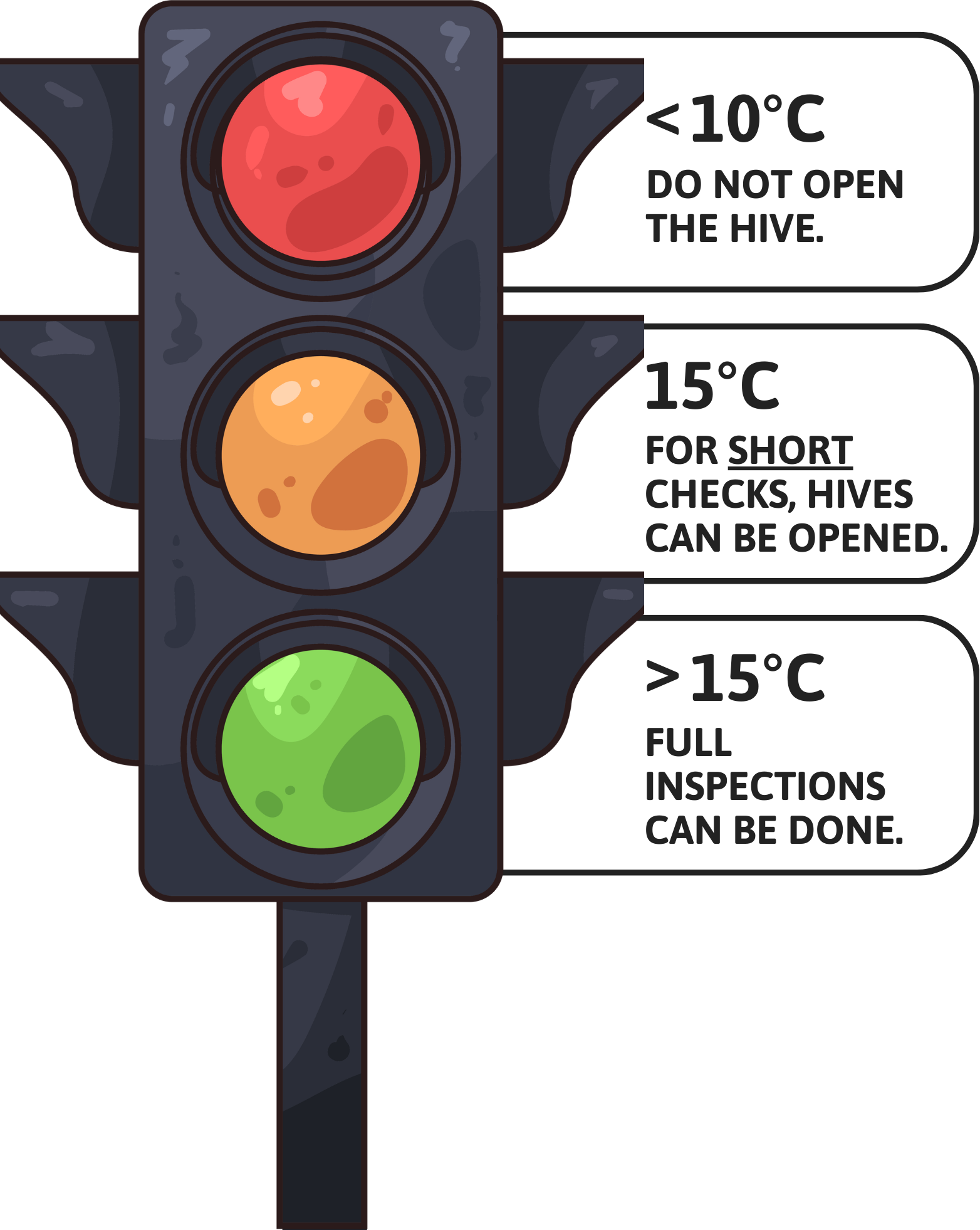
Rather than location, it’s best to base your start date on the outside temperature. The ideal temperature inside the hive is 34.5-35.5°C. Every time the hive is opened and frames are removed, your bees must work hard to recover any lost heat. This energy expenditure is enough to affect the survival rate of a colony. Keep the diagram below in mind to know the minimum temperatures it's acceptable to open your hive and remove frames.
A note: for temperatures between 10-15°C, the hive can be opened for quick checks (more of a sneak peek) but do not leave the hive open.
Whether your beekeeping season starts in January or February, spring management can be split into three stages: early, mid, and late spring management.
Early Spring Management
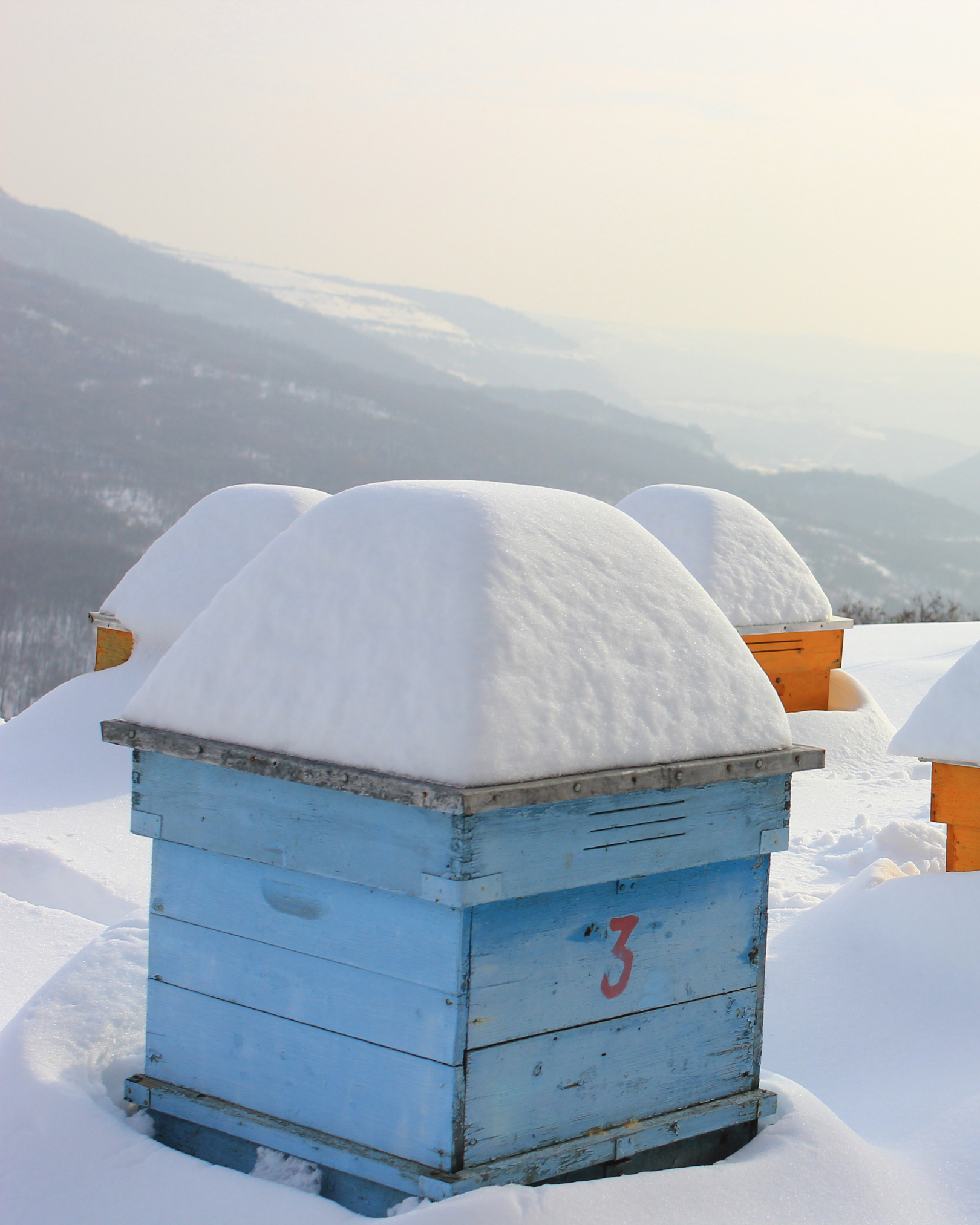
Also known as the midwinter inspection, the goal of early spring management is to find out what colonies have survived the winter, determine what caused any winterkill, and ensure that surviving colonies have enough food stores. At this point in the spring, it is still too cold for your bees to regularly leave the hive, so do your best to keep the hive closed during this check in order to minimize any change to the internal temperature of the hive. A basic early spring/midwinter inspection should include the following:
Diagnose any reason(s) for winterkill.
Ensure adequate food stores and provide additional feed if necessary.
Towards the end of February: remove dead colonies from the yard to prevent robbing and the spread of diseases and/or pests.
Caution as weak hives may appear dead – especially in doubles!
Mid-Spring Inspection
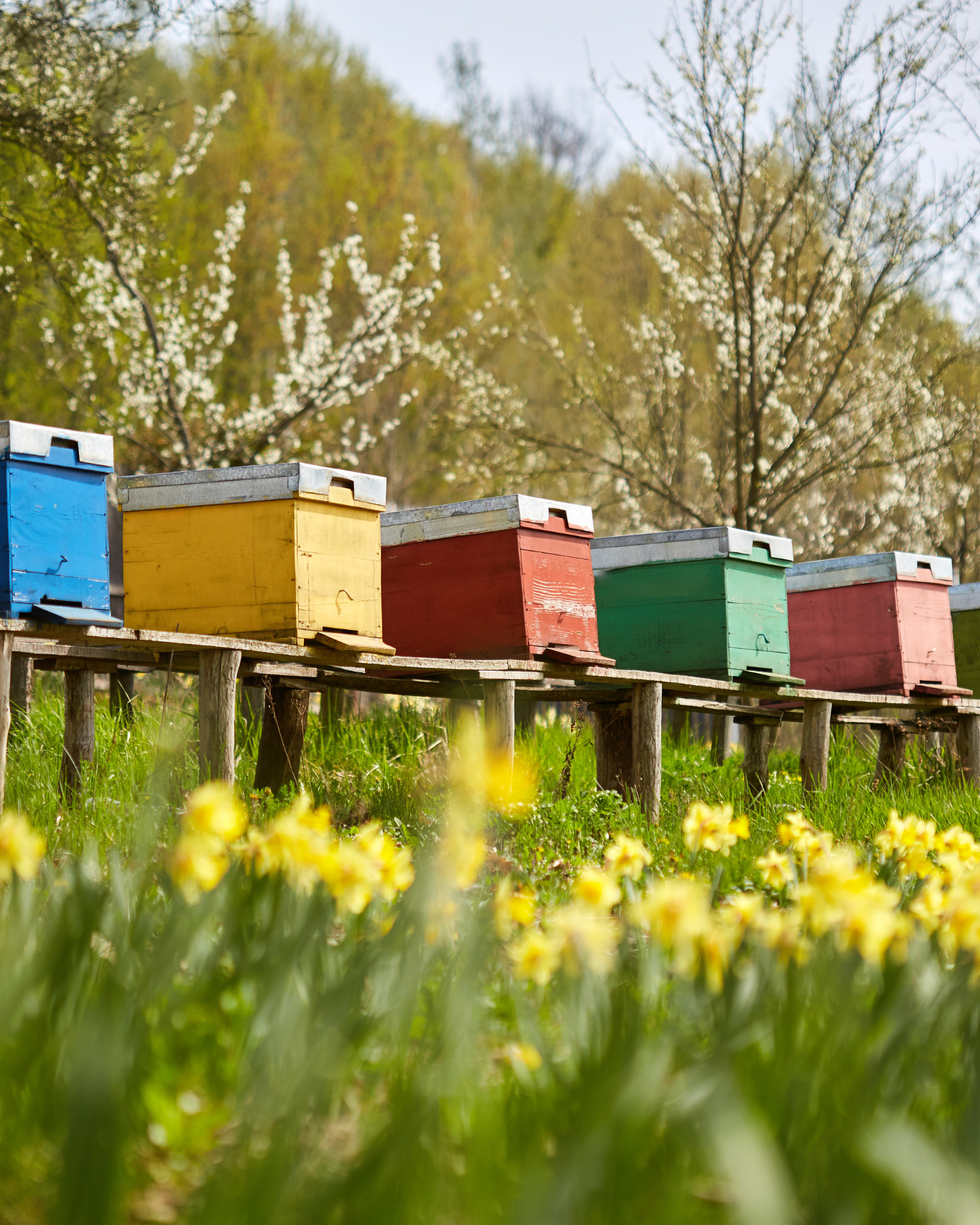
A mid-spring inspection is primarily done to determine the health of the colony and ensure that it can make it through the spring. The extent of a mid-spring inspection depends on the outside temperature.
If temperatures are >10°C:
Hives can be opened for short checks.
If temperatures are >15°C, remove frames and do a thorough check:
Inspect frames.
Confirm expanding brood nest.
Adults covering brood cells.
Minimum 2-3 frames of honey or feed.
Check for queen cells.
Pollen stored to the edge of frame.
If diseases or pests are present, treat if necessary.
Scrape bottom boards and replace old frames.
Late-Spring Inspection
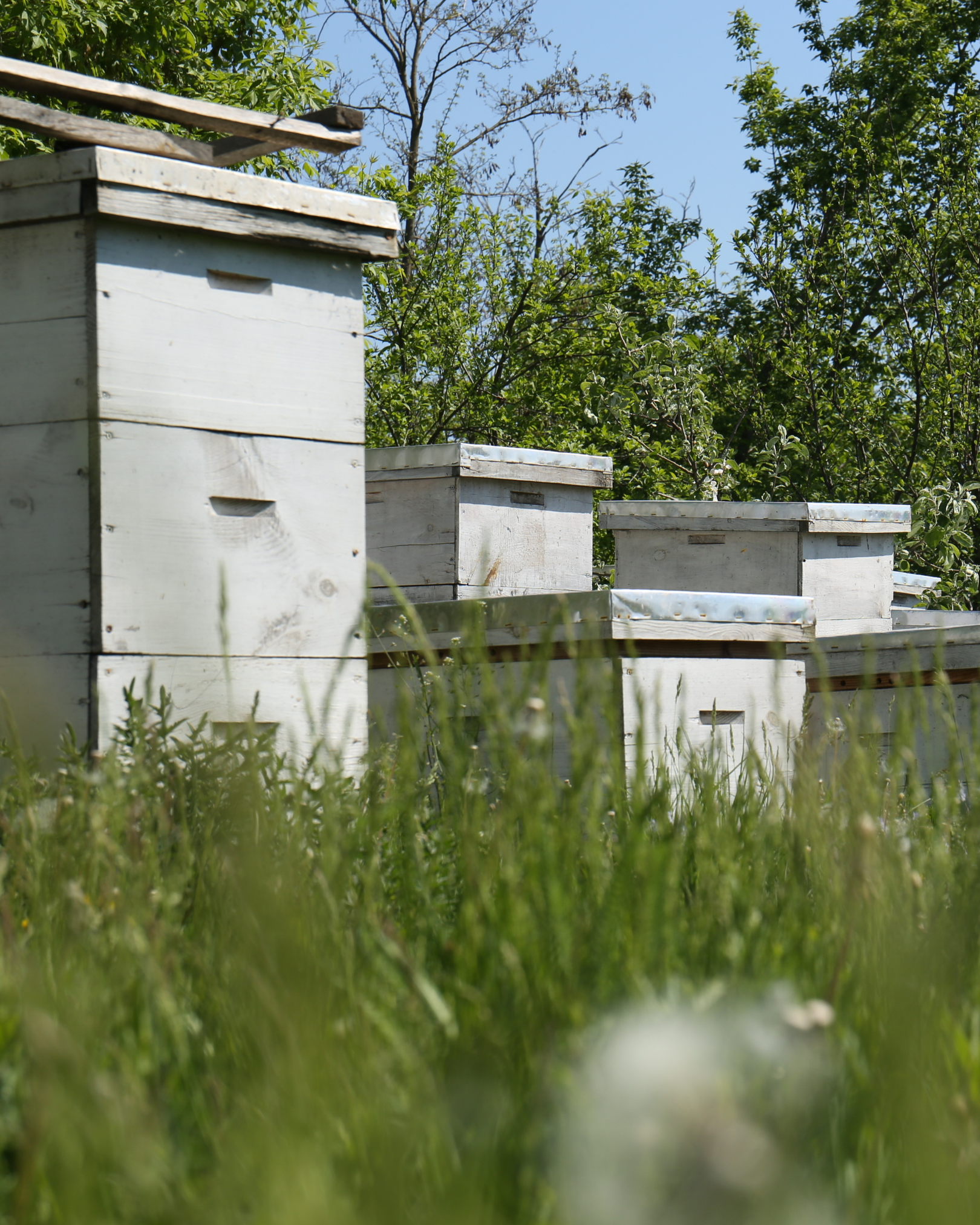
The primary purpose for the late-spring inspection is to provide supers for your colony and prevent swarming from occurring. A super is additional storage for your colony to keep excess honey and pollen for easy access throughout the season. By late spring, your colonies should have:
2-3 frames of honey.
Healthy brood.
No poor combs/frames (these should be cycled out of the brood nest).
Additional tasks include:
Preventing or controlling swarming (read our blog post on swarming here).
Adding supers for honey storage.
Checking queen health and performance.
Implementing an integrated pest management strategy to keep varroa mite levels below 1% (for more information on this, check out our online course Integrated Pest Management for Varroa Mite Control).
Providing room for the bee population to expand.
If you’re new to beekeeping and unsure what time of year is best to do these inspections, talk to your beekeeping community and see what works well for others in your area! To join your local bee club, click here for a list of beekeeping clubs in British Columbia.
///
Are you interested in learning about honey bee biology, pests & diseases of the honey bee, or becoming a certified beekeeping instructor in British Columbia? Take our online courses available now! Click here for more information.