
Pollen Supplementation: Pollen Patties
February 2026
Written by: Leilani Pulsifer
Edited by: Nuria Morfin & Becky Miller
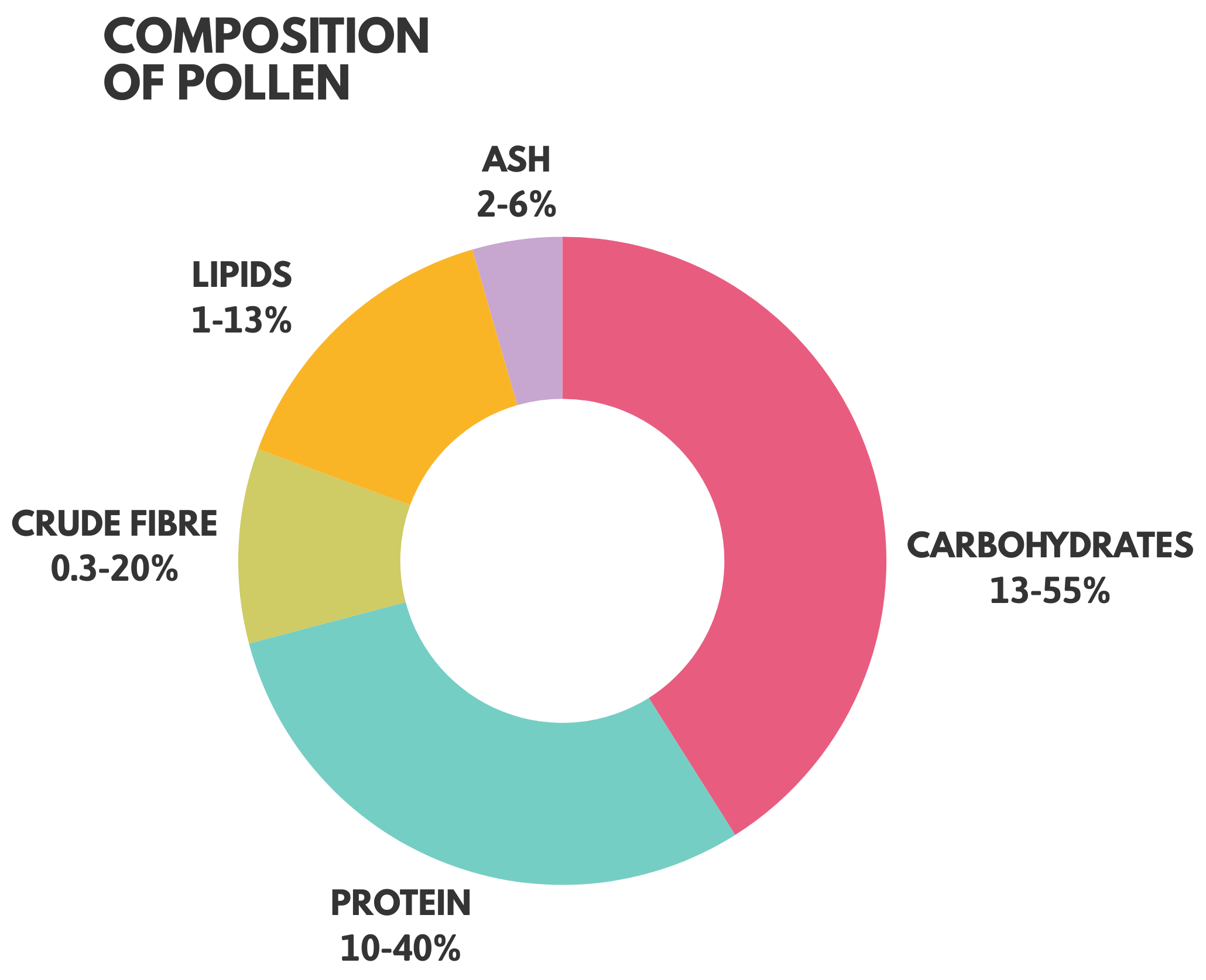
Pollen is primarily comprised of carbohydrates (13-55%), proteins (10-40%), lipids (1-13%), crude fibre (0.3-20%), and ash content (2-6%) [1,2]. Plants produce pollen as a means to reproduce, and pollinators collect it as an essential part of their diet. Honey bees rely on pollen as a source of micro (vitamins and minerals) and macronutrients (proteins and lipids) [3]. In honey bee colonies, it's fed to larvae and young bees in a form called bee bread—a mixture of pollen, nectar, and bee saliva. During times of low pollen availability, such as the early spring or entering fall, some beekeepers like to provide their colonies with a pollen supplement to make up for the lack of natural pollen available to foragers.
These pollen supplements are called ‘pollen patties’ and can be homemade or found commercially. They are typically a combination of the following ingredients: sugar, yeast, pollen, water, lemon juice, and a protein source. Some beekeepers or commercial producers will also add additional supplements to the recipe to help increase the health of their colonies, such as Honey B Healthy.
As is the case with most beekeeping practices, there are some beekeepers who choose to use pollen patties and others who choose not to. Some say that providing pollen in the late fall has the potential to prevent the production of winter bees [4], others say that pollen supply has no effect on the performance of winter bees [5], and others still say that pollen supplements can be beneficial to colony health and performance in the absence of natural pollen [6]. The purpose of all our resources is to provide a starting point for beekeepers of any level, allowing individuals to explore and adapt their practices that best supports the health of their colonies while aligning with their local environment and personal approach to beekeeping.
Despite the differing opinions amongst researchers and beekeepers regarding the regular supply of pollen supplements, most can agree on the fact that during a shortage of natural pollen, pollen supplements can be beneficial if not necessary for the survival of the colony. With that in mind, here are recipes for homemade pollen patties derived from the Ontario Beekeeping Association [7] and Utah State University [8]:
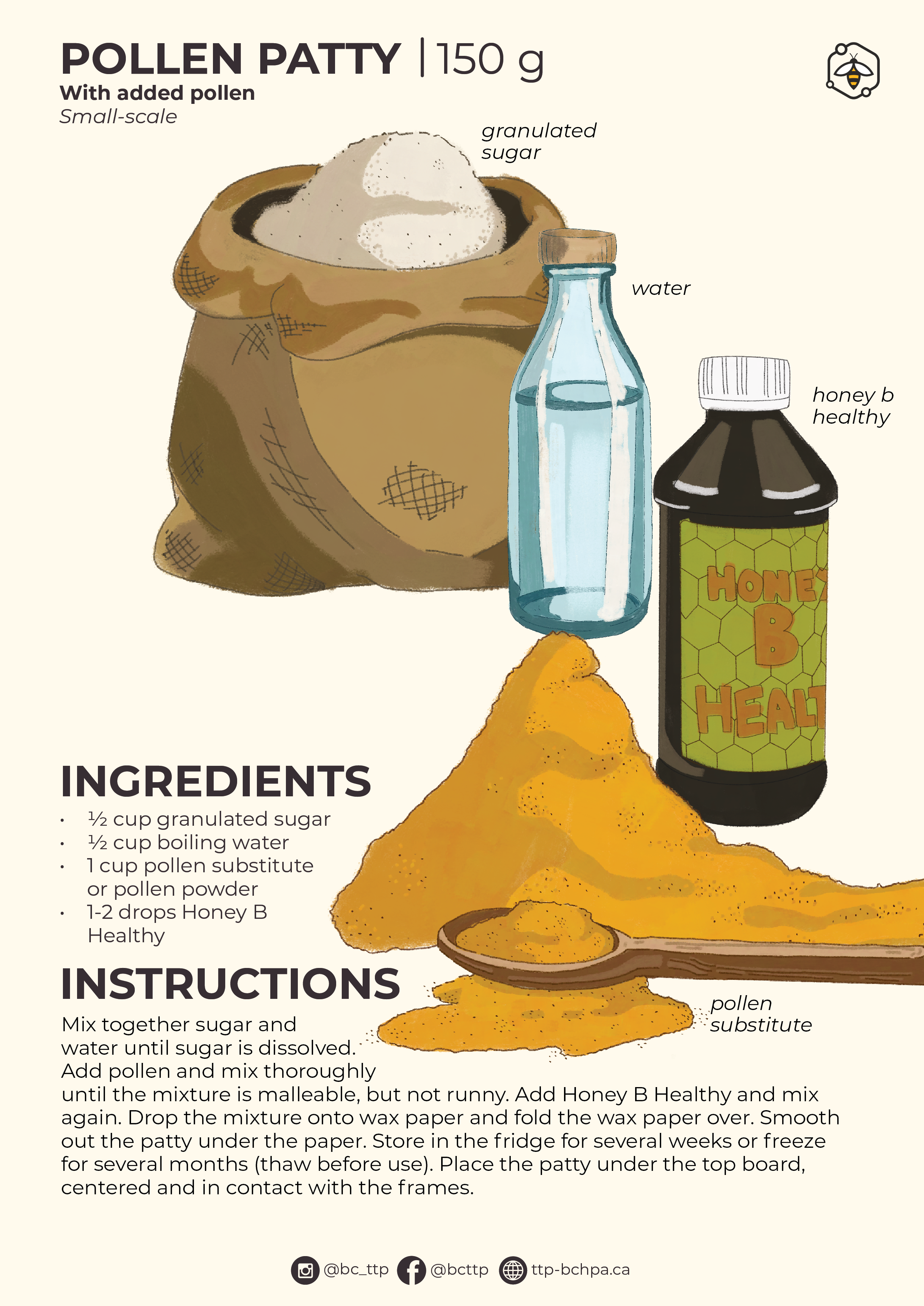
Small-scale pollen patty recipe with added pollen.
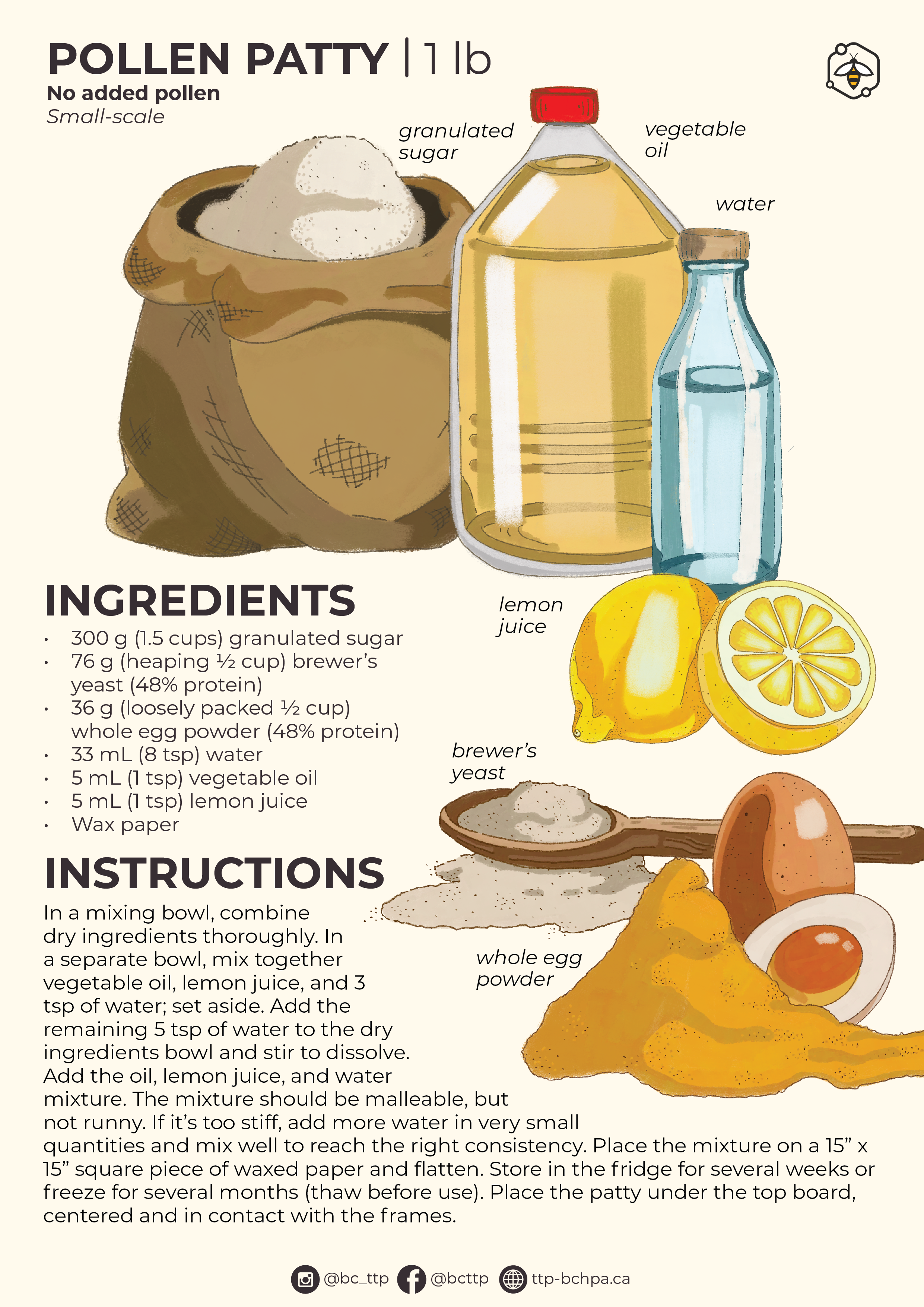
Small-scale pollen patty recipe with no added pollen.
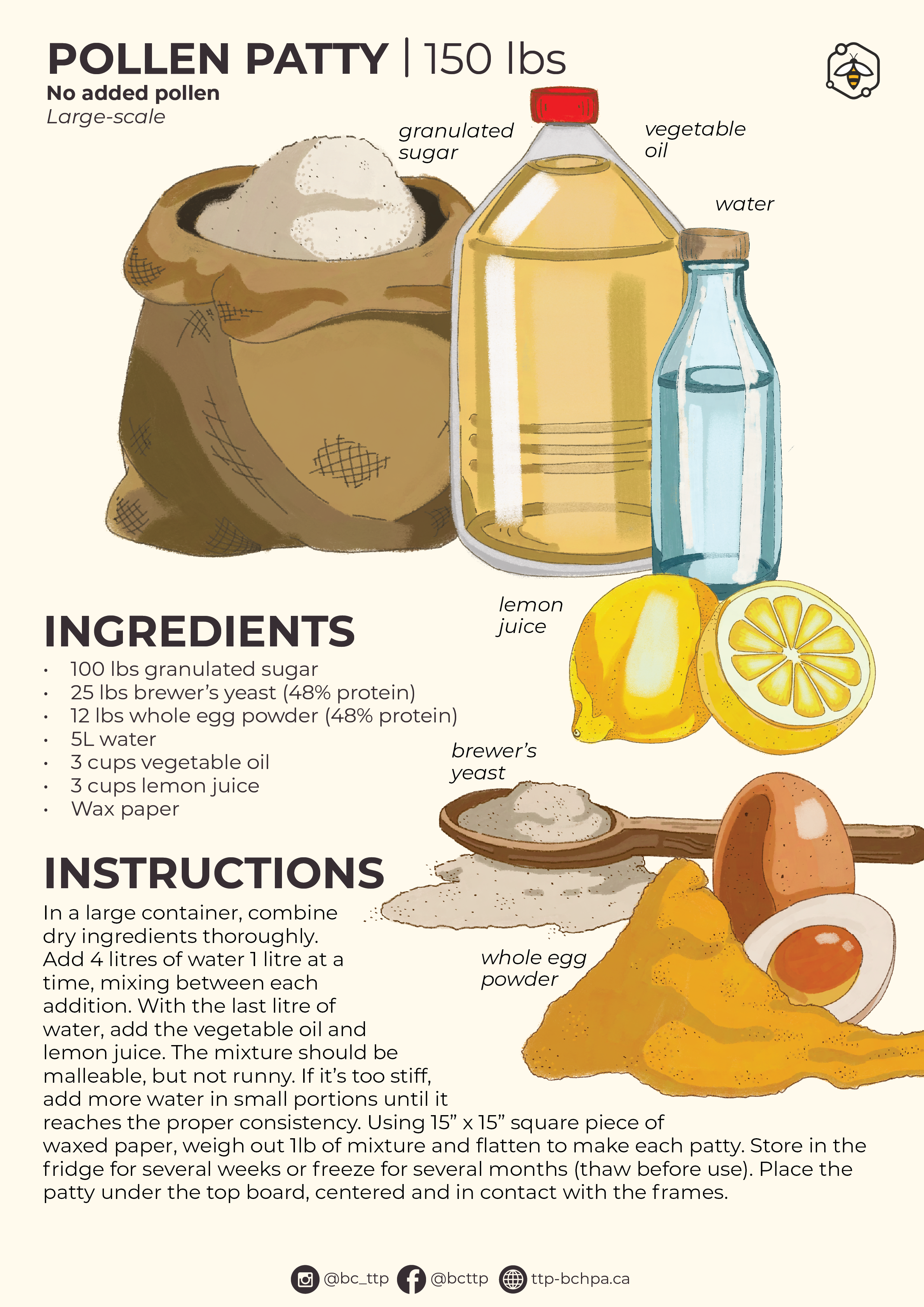
Large-scale pollen patty recipe with no added pollen.
Homemade pollen patties can be stored in the fridge for several weeks or in the freezer for several months (be sure to let it thaw before placing it in the hive). Place the patty under the top board in contact with the frames in the center so that the bees have direct access to it without having to venture far.
To keep up to date on our latest blog posts and free beekeeping resources follow our socials or send us an email to info@ttp-bchpa.ca.
References
[1] Thakur, M., & Nanda, V. (2020). Composition and functionality of bee pollen: A review. Trends in Food Science & Technology, 98, 82–106. https://doi.org/10.1016/j.tifs.2020.02.001
[2] Campos, M. G. R., Bogdanov, S., de Almeida-Muradian, L. B., Szczesna, T., Mancebo, Y., Frigerio, C., & Ferreira, F. (2008). Pollen composition and standardisation of analytical methods. Journal of Apicultural Research, 47(2), 154–161. https://doi.org/10.1080/00218839.2008.11101443
[3] Bryś, M. S. & Strachecka, A. (2024). The key role of amino acids in pollen quality and honey bee physiology – a review. Molecules, 29, 2605. Doi: doi.org/ 10.3390/molecules29112605
[4] Burlew, R. (2013). Pollen patties with a warning: Use with caution! Honey Bee Suite. https://www.honeybeesuite.com/pollen-patties-when-and-why/.
[5] Mattila, H. R., & Otis, G. W. (2007). Manipulating pollen supply in honey bee colonies during the fall does not affect the performance of winter bees. The Canadian Entomologist, 139(4), 554–563. https://doi.org/10.4039/n06-032
[6] Saffari, A., Kevan, P. G., & Atkinson, J. L. (2010). Palatability and consumption of patty-formulated pollen and pollen substitutes and their effects on honeybee colony performance. Journal of Apiculture Science, 54(2), 63-71.
[7] OBA Technology Transfer Program. (2012). Homemade protein supplement recipe [PDF]. Ontario Beekeepers’ Association. https://www.ontariobee.com/sites/ontariobee.com/files/document/Homemade%20Protein%20Patty%20Recipe_0.pdf
[8] Utah State University Extension. (n.d.). Bee nutrition. Utah State University Extension Beekeeping. Retrieved Jan 29, 2026 from https://extension.usu.edu/beekeeping/learn/bee-nutrition#