
Strengthening community engagement in American foulbrood surveillance to determine antibiotic-resistant Paenibacillus larvae in British Columbia, Canada
This project has been sponsored by:

Click here for more information about Pollinator Partnership Canada.
Principle Investigator

Dr. Muhammad Fahim Raza
PhD | Technician in Apicultural Research, Technology Transfer Program
Collaborators

Dr. Nuria Morfin
PhD | Chair of the Technology Transfer Program, British Columbia Honey Producers Association; Assistant Professor, Department of Entomology, University of Manitoba

Dr. Paul Adams
PhD | Director, Applied Genomics Centre, and Faculty, Biology Department, Kwantlen Polytechnic University

Dr. Mathias Schuetz
PhD | Faculty, Biology Department, Kwantlen Polytechnic University
Objectives
American foulbrood (AFB) is an infectious disease caused by the bacterium Paeninacillus larvae. This disease is highly contagious and is an ongoing threat to Canadian apiculture as it has caused severe damage to many colonies. The purpose of this study is to enhance British Columbian beekeepers’ preparedness to combat this disease.
The objectives of this study are to:
a) enhance outreach to the beekeeping community through extension channels to promote best management practices (BMP) for the prevention and control of AFB,
b) expand pooled, extracted honey sampling across economically important apiculture regions of BC to quantify Paenabacillus larvae spores using culture-based technique, and
c) determine antimicrobial resistance among P. larvae isolates from beekeeping operations in BC using quantitative minimum inhibitory concentration (MIC) assays.
Length of project
Proposed end date April 2027.
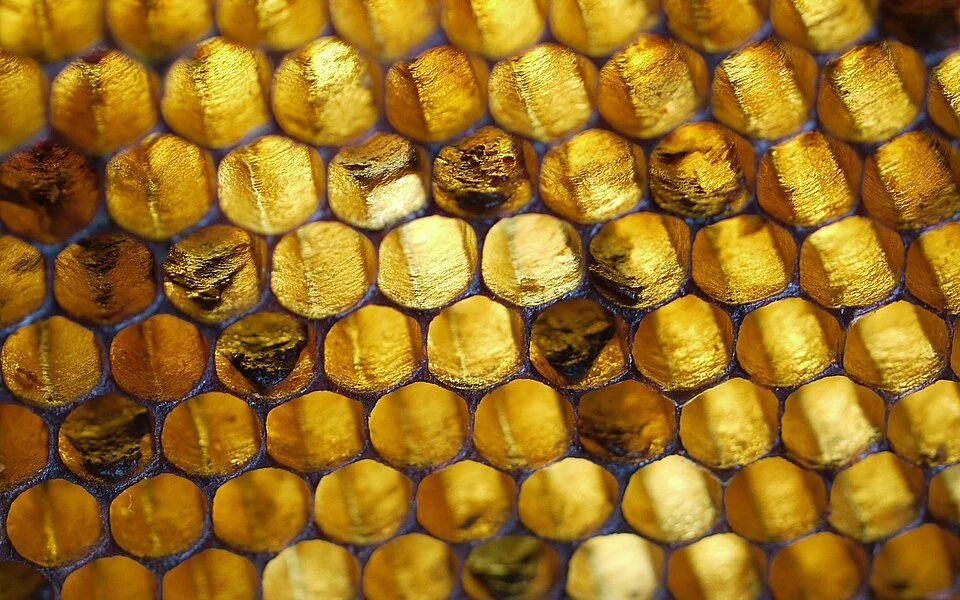
American Foulbrood (AFB in combs, 2012).
References
AFB in combs. (2012, April 11). Wikimedia.Org. https://commons.wikimedia.org/wiki/File:AFB_in_combs.jpg
